Table of Contents
ToggleA bathroom remodel doesn’t have to drain your savings. With smart planning and strategic DIY work, homeowners can transform a tired bathroom into a fresh, functional space for under $3,000. The key is knowing where to invest your money and where you can save by tackling projects yourself. This guide walks you through the essentials: setting realistic priorities, finding affordable materials, and identifying which projects deliver the biggest visual and functional impact without requiring a licensed contractor. Whether you’re updating a half-bath or doing a full refresh, these strategies will help you maximize your budget and create a bathroom you’ll actually enjoy using every day.
Key Takeaways
- A low cost bathroom remodel under $3,000 is achievable by prioritizing must-haves like fixing leaks over cosmetic updates and spreading work across multiple weekends to stay budget-conscious.
- Allocate roughly 30–40% of your remodel budget to flooring and walls, 25–30% to fixtures, and the remainder to lighting and finishes to prevent overspending on cosmetics.
- DIY high-impact tasks like painting, caulking, replacing hardware, and swapping out mirrors and light fixtures for $30–150 each deliver the biggest visual transformation with minimal expense.
- Invest in mid-range quality fixtures ($60–120 for faucets, solid brass hardware) rather than cheap alternatives that corrode quickly, ensuring durability without excessive spending.
- Know your limits—hire licensed professionals for plumbing, electrical, ventilation, and complex tile work to avoid costly mistakes, while tackling cosmetic updates yourself to maximize your bathroom remodel savings.
Plan Your Remodel on a Budget
Set a Realistic Budget and Prioritize Must-Haves
Before you swing a hammer, sit down and list what’s broken, what’s ugly, and what’s just inconvenient. A leaky faucet is a must-fix. Dingy grout is annoying but not urgent. That’s the difference between money you have to spend and money you can defer.
Start by allocating roughly 30–40% of your budget to flooring and walls, 25–30% to fixtures (sink, toilet, faucet), and the remainder to lighting, hardware, and finishing touches. This isn’t a rigid formula, it depends on your priorities, but it helps prevent overspending on cosmetics while the toilet still runs constantly.
List every project, estimate its cost, and honestly assess your skill level. Can you tile a wall? Prime and paint? Replace a faucet? If a task feels beyond your confidence, get a rough quote from a local plumber or electrician. Some jobs, venting a bathroom exhaust fan, relocating a toilet, rewiring a light switch, require permits or licensed work in most jurisdictions. Knowing this upfront prevents costly mistakes and keeps you code-compliant.
Consider spreading the work over a few weekends instead of doing everything at once. Tackle cosmetic updates first (paint, hardware, lighting), then move to fixtures if budget allows. This phased approach also lets you live with the space and adjust priorities as you go.
Smart Shopping Strategies for Bathroom Materials
Where to Find Affordable Fixtures and Finishes
Big-box stores (Home Depot, Lowe’s) offer good baseline pricing, but don’t assume they’re the cheapest everywhere. Floor and tile liquidators, overstock retailers like Overstock and Wayfair, and even Facebook Marketplace often have deals on discontinued styles and returned items. Salvage yards sometimes carry vintage fixtures at a fraction of retail, a cast-iron clawfoot tub or antique vanity can anchor a budget remodel with character.
When shopping for fixtures, choose solid brass or stainless-steel faucets over cheap chromed plastic. A $40 faucet that corrodes in two years isn’t a bargain. Mid-range options ($60–120) from brands like Moen or Delta last and look fine. The same logic applies to hinges, towel bars, and drawer pulls, better to spend $15 on a single quality piece than $3 on five that’ll wobble loose.
For tile, standard ceramic subway tiles (3×6 or 4×4 inches) are affordable and timeless. Porcelain costs more but handles moisture better, especially in shower stalls. Avoid ultra-trendy large-format tiles for a budget remodel, they’re pricey and require more cuts and waste. Mix a classic tile with budget-friendly paint and hardware to look intentional, not cheap.
Paint is where you can afford quality. Use a bathroom-grade paint with a semi-gloss or satin finish (easier to wipe clean than flat paint). One gallon typically covers 350 square feet: a small bathroom usually needs one gallon of wall color and a half-gallon of trim paint. Shop during sales, Benjamin Moore, Sherwin-Williams, and budget brands like Behr all perform well in moisture-prone spaces.
DIY Projects That Save the Most Money
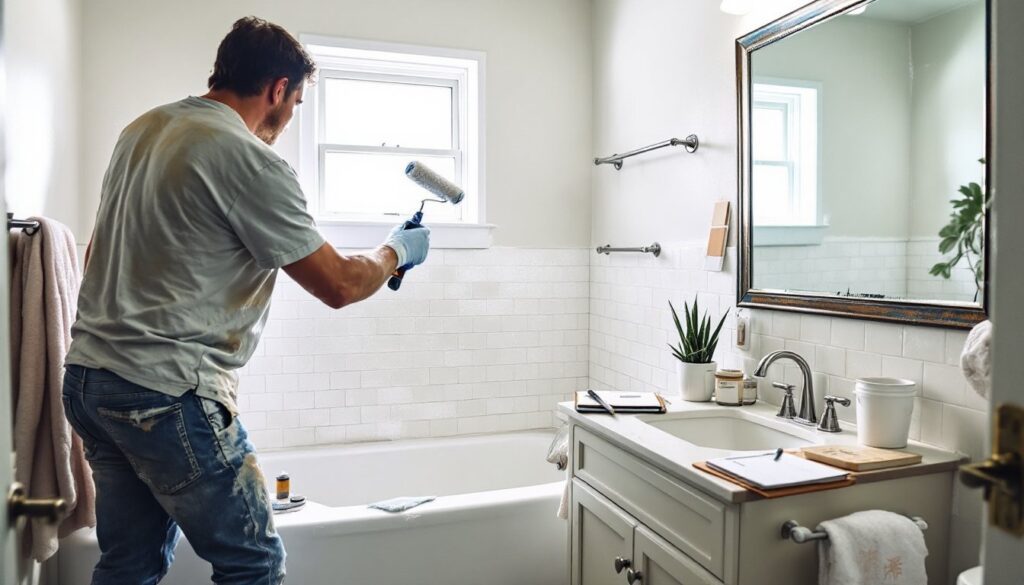
Painting and caulking top the list of high-impact, low-cost DIY tasks. A fresh coat of paint costs $30–80 in materials but can feel like a $500 upgrade. Prime all surfaces first, especially over old paint, stains, or water marks, or the new color won’t hide flaws. Use a roller for walls and a brush for trim and corners. Take your time: a rushed paint job shows.
Caulking seams around tubs, shower surrounds, and backsplashes takes an hour and costs $5–10 in caulk and a caulking gun. Remove old caulk with a utility knife or caulk softener product, clean the joint thoroughly, and apply a single smooth bead of silicone or acrylic caulk. This prevents water from seeping behind tiles and causing mold or rot.
Removing and replacing hardware is genuinely easy and yields surprising visual results. New cabinet pulls, towel bars, and a modern light fixture transform a dated bathroom for $50–150. When removing old hardware, note the location of screw holes: most modern fixtures mount in the same spots.
Grout cleaning and resealing is labor-intensive but doable solo. Rent a grout saw ($10–20 per day) to remove failing grout, then regrout and seal. It’s slow, dusty work, wear a dust mask and eye protection, but it’s far cheaper than hiring someone. If the grout is simply stained (not cracked or failing), scrub with a stiff brush and a bleach-based bathroom cleaner. Often that’s enough.
Replacing a vanity or pedestal sink is within reach if you’re comfortable with basic plumbing. Turn off water at the shutoff valve, disconnect the supply lines (have a bucket ready), unbolt the old unit, and install the new one in reverse. Solid plywood bases support sinks better than particle board and cost only $20–40 more. If you don’t trust your skills, a plumber charges $150–300 for this job, still a manageable cost if you source an affordable vanity.
Quick Updates That Make a Big Impact
A new mirror can completely refresh a bathroom’s look. A large, framed mirror above the sink ($30–100) instantly feels more upscale than a cheap plastic-backed version. Pair it with updated wall sconces (LED, $20–60 each) on either side for modern hotel-style lighting that flatters skin tone far better than a single overhead fixture.
Swapping the toilet seat takes two minutes and costs $15–40. Soft-close hinges eliminate the slam and feel more refined than a basic plastic seat. If the toilet bowl itself is stained or constantly runs, replacing the flapper (a $3–5 part) or the entire toilet ($150–300) might be necessary. A running toilet wastes thousands of gallons yearly, so don’t ignore it for budget reasons.
A shower curtain liner and ring refresher can surprise you. Remove soap scum from the existing liner (or buy a new one for $8–15), replace old metal rings with plastic or stainless rings ($10–20 for a set), and the shower corner suddenly feels clean and intentional. If you have a shower door, replace the weatherstripping and silicone seals, a $10 fix that stops water from leaking onto the floor.
Background music or task lighting changes perception. A small waterproof Bluetooth speaker ($20–40) and a dimmable LED light bulb ($8–15) turn a cramped, fluorescent bathroom into a spa-like retreat. This costs almost nothing but shifts how people feel in the space. You’ll be amazed how much a few candles and a small plant contribute, sensory details matter as much as structural changes.
When to Hire Help vs. Go Solo
Know your limits. Plumbing and electrical work often require permits and licensed tradespeople. If you’re relocating the toilet, moving a drain, or installing a new vent fan through the roof, hire a licensed plumber and electrician. These mistakes are expensive and dangerous to fix later. A plumber’s consultation typically costs $75–150: getting a toilet installed correctly is worth it.
Tile installation looks easier than it is. If your bathroom has significant water exposure (shower enclosure, floors), improper substrate, thinset, or grout application leads to mold and structural damage within months. Save money on tile style, not on installation quality. If you’re brave, try a small backsplash behind the sink first. A full shower surround is a different animal, consider hiring this out or learning from a trusted source like Young House Love’s tile tutorials before tackling it yourself.
Contractor costs vary wildly by region and scope. HomeAdvisor’s cost estimators and ImproveNet’s pricing tools give you ballpark figures for your area. Get three quotes, verify licenses and insurance, and ask about project timelines and payment schedules. The cheapest estimate isn’t always the best, a contractor who rushes and cuts corners will cost more in repairs later.
For a truly budget remodel, aim to DIY the cosmetic work (paint, hardware, simple caulk repairs) and hire only for structural or specialized tasks. This balance keeps quality high without sacrificing affordability. A $2,500 remodel with $300–500 in professional help often outperforms a fully DIY job done hastily or incorrectly.