Table of Contents
ToggleWhen a leak shows up in your commercial roof, the first question isn’t usually “what caused it?”, it’s “how much is this going to cost?” Roof repairs can range from a few hundred dollars for a simple patch to tens of thousands for structural damage, depending on material type, roof size, and damage extent. Understanding what drives these costs helps you avoid sticker shock and make smart decisions about repair versus replacement. Whether you manage a small commercial building or oversee multiple properties, knowing the typical price ranges and what factors influence them puts you in a stronger negotiating position with contractors.
Key Takeaways
- Commercial roof repair costs range from $300–$1,500 for minor damage to $3,000–$10,000+ for structural issues, depending on material type, roof size, and damage extent.
- Metal roofs are cost-effective to maintain with localized repairs, while flat roof repairs vary by substrate material; repairs addressing pooling water or membrane tears typically cost $500–$3,000.
- Roof accessibility, damage type, weather conditions, and local labor rates significantly impact commercial roof repair costs, making it essential to obtain multiple contractor bids for accurate pricing.
- Professional roof repairs are almost always recommended over DIY attempts; failed DIY work can lead to hidden water damage costing $5,000–$20,000 in secondary repairs and voids insurance coverage.
- Plan for roof replacement instead of ongoing repairs when maintenance costs exceed 30% of replacement cost within 5 years or when repairs only extend roof life by 3–5 years on aging structures.
- Conduct preventive roof inspections every 1–2 years to catch problems early, as early detection can save thousands in emergency repairs and helps you avoid costly last-minute commercial roof repair situations.
Average Commercial Roof Repair Costs by Material Type
Metal and Flat Roof Repairs
Metal roofs are durable and cost-effective to maintain. A typical repair for rust spots, loose fasteners, or minor punctures runs $300–$1,500 depending on damage severity and roof size. If seams need resealing or flashing replacement, expect $800–$2,500 per area treated. Metal roofs are forgiving because damage is often localized: you can repair a single panel without affecting the entire structure.
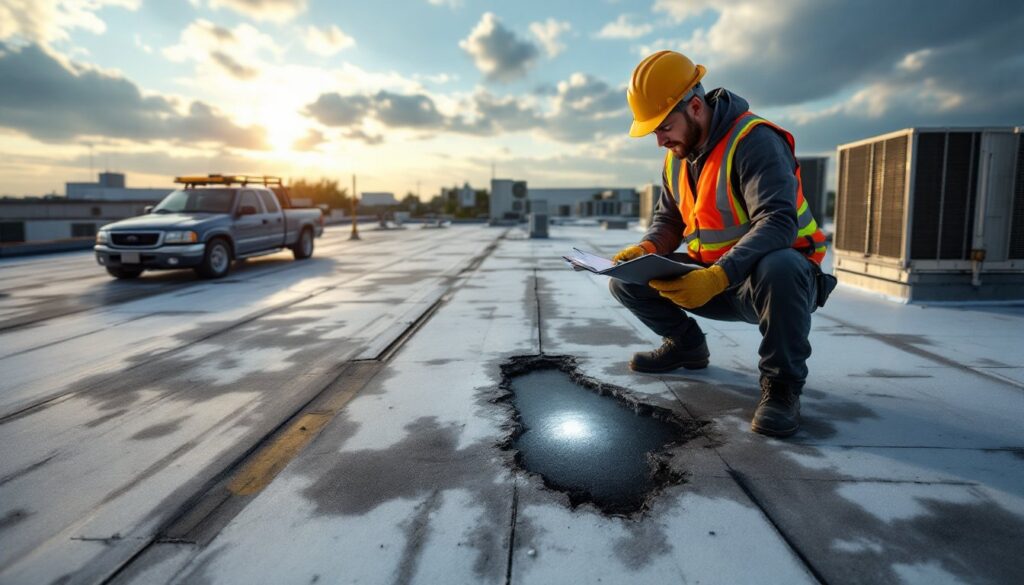
Flat roof repairs follow a similar cost structure but vary widely based on substrate material. Repairs addressing pooling water, minor membrane tears, or re-coating select areas typically cost $500–$3,000. Pitched metal roofs allow water to shed naturally, reducing the pooling and related damage you see on flat surfaces. The labor-intensive nature of working at height and the need for specialized sealants drive these figures up.
Membrane and Asphalt Repairs
TPO (thermoplastic olefin) and PVC membranes, common on commercial flat roofs, incur repair costs of $600–$2,000 for seam or puncture patching. If a membrane has developed multiple small leaks over a large area, you’re looking at full overlay or replacement instead, that’s a different project with significantly higher costs. A patch lasts 5–10 years, but membranes approaching their service life may fail again soon after.
Asphalt and built-up roofs are cheaper to repair initially, $400–$1,800 for patching and re-coating, but they deteriorate faster than metal or membrane systems. Built-up roofs are labor-intensive to install but lower in upfront cost. Repairs work well for early-stage damage: once the roof is 15+ years old, replacement becomes more economical than repeated patching.
Key Factors That Impact Your Repair Bill
Roof size and accessibility set the baseline. A 5,000-square-foot flat commercial roof is quicker and safer to work on than a steep 20,000-square-foot pitched metal structure. Larger roofs mean higher labor hours: inaccessible areas (near HVAC units, vents, or architectural features) add time and risk premiums.
Damage type and extent matter enormously. A localized leak from a single puncture is a one-person job. Widespread membrane degradation, structural rot underneath, or compromised flashing across multiple areas pulls additional crew members and supplies into the scope. Some repairs expose secondary damage that wasn’t visible until you opened the roof up.
Weather and season influence pricing. Off-season repairs (winter in cold climates) may cost less because contractors have more availability. Emergency same-day repairs carry rush fees. Wet weather delays work and increases safety risks, pushing costs up by 15–30%.
Local labor rates and contractor competition swing costs significantly. A commercial roofer in a rural area may charge $75–$100 per hour: the same work in a major city costs $120–$200+ per hour. Get multiple estimates, prices vary wildly even among licensed, qualified contractors. Online platforms like HomeAdvisor and Angi let you compare local contractor rates and read past customer reviews before committing.
Materials and supply availability affect the bill too. If your roof uses a specialty membrane or metal profile, sourcing the matching material costs more. Standard asphalt or basic PVC stays cheaper because it’s in constant stock.
DIY vs. Professional Repair: Cost-Benefit Analysis
Most commercial roof repairs demand professional installation. If you own or manage the building, a liability issue, someone injured during a repair, or faulty work that voids your roof warranty, costs far more than hiring a licensed roofer. Insurance companies typically deny claims on DIY roof work, especially on commercial structures.
Small, cosmetic touch-ups, clearing debris, resealing visible flashing, or patching tiny punctures on a low-slope roof you can safely access, might be worth a DIY attempt if you’re confident. Materials run $50–$200, and you save 2–4 hours of labor. But the moment your repair involves working at height, using specialized sealants, or affects structural integrity or weatherproofing, bring in a professional.
The real cost of a failed DIY repair is often the water damage underneath: mold, rotted wood, damaged insulation, and interior finishes. A $500 repair job done incorrectly becomes a $5,000–$20,000 fix when you have to address hidden secondary damage. Building codes require licensed roofing contractors to install roofing membranes and flashing: homeowners and unlicensed workers can’t legally do this work in most jurisdictions, and insurance won’t back you up if something goes wrong.
Professional roofers carry liability insurance, warranty the work, and know local building codes. They also catch issues you’d miss, failed underlayment, structural problems, improper drainage setup, and address them before they become catastrophic. Paying $2,000–$5,000 upfront for a professional repair often saves you $10,000+ in water damage claims over the next few years.
Money-Saving Tips and When to Replace Instead of Repair
Get multiple bids from licensed contractors. Roofers price jobs differently based on crew size, material sourcing, and schedule. Three to four estimates give you a realistic market range and expose outlier bids (both suspiciously low and inflated).
Bundle repairs if you’re addressing multiple areas. A contractor charging $2,000 to patch one spot might do two or three patches for $2,800–$3,500 total, better unit pricing. Similarly, if flashing, fasteners, and membrane seams all need attention, a comprehensive evaluation catches everything in one visit instead of three separate service calls.
Check warranty and lifespan math. A repair that costs $1,500 on a 25-year-old roof might only buy you 3–5 more years. The same building might need $3,000–$8,000 in repairs over the next decade to keep limping along. At that point, a full replacement, costing $10,000–$25,000 depending on material and roof size, becomes smarter. Tools like ImproveNet help compare replacement costs against ongoing repair expenses.
Prioritize roof inspections every 1–2 years, especially on aging roofs. Early detection of membrane degradation, fastener corrosion, or flashing separation prevents expensive emergency repairs. A $200 inspection saves you thousands by catching problems when they’re still cheap to fix.
Plan for replacement if repairs exceed 30% of the roof’s replacement cost in any given 5-year span. At that threshold, you’re throwing good money after bad. A new roof with a 20–30-year warranty provides peace of mind and better long-term economics than constant patches on a failing system.
Choose durable materials for replacements. TPO and PVC membranes cost more upfront than asphalt but last 20–30 years versus 15–20 years for built-up roofs. Metal roofs top out at 40–70 years. The longer lifespan means fewer replacement cycles and lower lifetime costs per year.
Conclusion
Commercial roof repair costs hinge on material, damage scope, roof size, and labor rates in your area. Quick repairs on small areas run $300–$1,500: larger or structural work pushes into the $3,000–$10,000+ range. Always get professional bids, clarify warranty coverage, and weigh repair costs against replacement economics over time. Preventive inspections and addressing small issues early keep your building watertight and your wallet safer in the long run.