Table of Contents
ToggleReplacing bow windows is one of those home improvement projects that can feel deceptively simple until you start getting quotes. A homeowner might expect a straightforward window swap, but bow window replacement costs vary wildly, anywhere from $1,500 to $15,000 per window depending on size, materials, and your region. The good news? Understanding what drives those price tags helps you make smarter decisions and avoid overpaying. This guide walks through the real costs, what affects them, and where you can trim the budget without cutting corners on quality or durability.
Key Takeaways
- Bow window replacement costs range from $1,500 to $15,000 per window depending on size, materials, and labor rates, with mid-range vinyl installations averaging $2,200 to $3,500.
- Material selection significantly impacts pricing—vinyl is most affordable ($1,200–$2,500 installed), while fiberglass and wood-clad options cost $3,000–$6,000+ but offer superior insulation and durability.
- Installation labor typically costs $500–$1,500 per window and varies by region; scheduling in fall or winter can yield 10–15% labor discounts compared to peak spring and summer rates.
- Regional pricing varies substantially: Northeastern and coastal markets run 15–25% above national averages, while Midwest and mountain states typically cost 10–20% less.
- Obtain detailed written quotes from at least three contractors with line-item breakdowns, and prioritize windows lasting 20–30 years, which recoup energy efficiency savings within 5–10 years.
- Replace bow windows showing frame rot, multiple failed seals, condensation, or drafts; repair makes sense only for isolated issues like broken panes ($200–$400) or minor caulk failure ($100–$200).
What Affects Bow Window Replacement Costs
Window Size and Material Selection
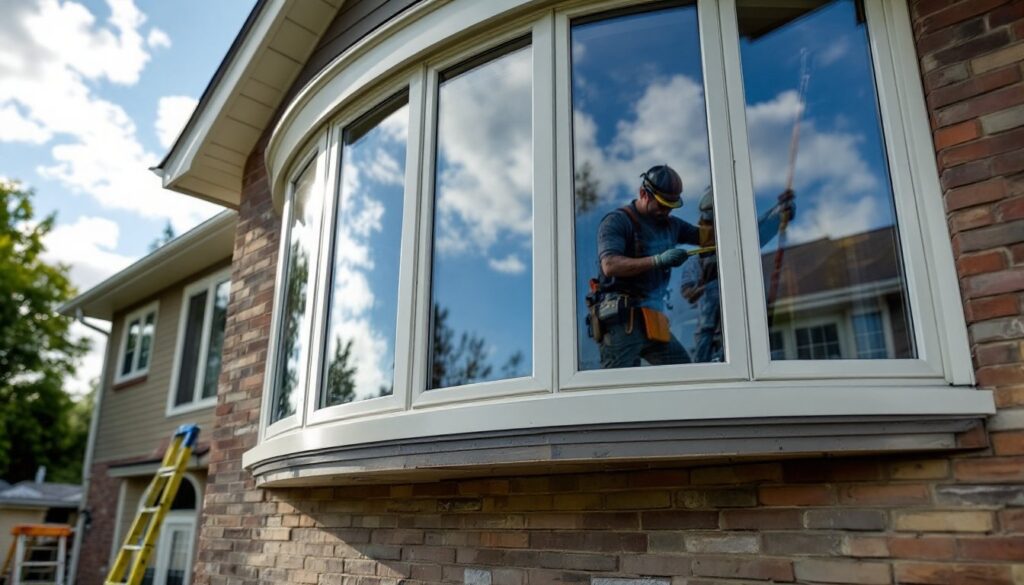
Bow windows are larger than standard single-hung units, they project outward with curved mullions (the vertical strips between panes) and multiple glass sections. That complexity alone adds cost. A small bow window (roughly 3 to 4 feet wide) might run $800 to $2,000 per unit, while a large bow window (5 to 6 feet or wider) can hit $3,000 to $6,000 before installation labor even enters the picture.
Material choice is the next major factor. Standard vinyl bow windows are the most affordable, typically $1,200 to $2,500 installed. Aluminum frames cost more but are slimmer and strong, running $2,000 to $4,000. Fiberglass and wood-clad options push into $3,000 to $6,000+ territory because they offer better insulation and curb appeal. Energy ratings matter too: Low-E coating, argon-filled panes, and higher NFRC ratings (measuring thermal performance) add $300 to $800 per window but lower heating and cooling bills over time.
Glass type influences price significantly. Single-pane glass is rare today but cheapest. Double-pane is standard and mid-range. Triple-pane adds insulation but costs 30–40% more. Tempered or impact-resistant glass, useful in hurricane zones, bumps costs another 20–30%.
Installation Labor and Complexity
Labor typically runs $500 to $1,500 per bow window, depending on your region and contractor experience. Urban markets and coasts trend higher. Rural areas often run 20–30% less. The installation itself matters: removing old frames cleanly, disposing of glass safely, flashing the opening properly, and sealing gaps requires skill. Botched installation can lead to water infiltration, drafts, and structural issues, so cheap labor isn’t a bargain.
Complexity adds up fast. If your bow window sits in a difficult-to-access spot (second-story corner, for example), expect premium labor rates and potentially scaffolding rental. Older homes may have masonry openings that need careful reframing, that’s specialty work. If structural issues like rotted sills or damaged headers surface during removal, you’re looking at $500 to $2,000 in additional framing repair. Historic homes with original trim may require custom matching, which increases costs by 30–50%.
Average Pricing for Bow Window Replacement
For a typical homeowner, here’s what the numbers look like in 2026. A standard mid-range vinyl bow window replacement, roughly 4 feet wide, double-pane, Low-E coating, averages $2,200 to $3,500 installed. Three bow windows across a home runs $6,600 to $10,500. If you’re upgrading to fiberglass or composite frames, add $1,000 to $2,000 per window. Triple-pane windows add another $400 to $600 per unit.
Regional variation is real. Northeastern and coastal markets run 15–25% above national averages. Midwest and mountain states typically run 10–20% below. Labor rates, material availability, and local building codes all influence pricing. A contractor in New England might charge $1,200 per window for installation, while the same crew in rural Colorado charges $700.
Research from HomeAdvisor reports bow window costs ranging considerably based on customization and geographic location, confirming that shopping multiple quotes in your area is non-negotiable. Don’t assume the lowest bid is the best deal, check references, verify licensing, and confirm warranty terms. Many reputable contractors offer 10-year warranties on windows and 5-year warranties on labor: if someone undercuts competitors by 40%, there’s usually a reason.
How to Save Money on Your Replacement Project
Start with a realistic timeline. Replacing windows during peak season (spring and summer) means longer wait times and higher labor rates. Fall and winter demand is lighter, you might negotiate 10–15% labor discounts by scheduling in November or January. That said, don’t delay if your windows are failing: a single broken seal or compromised frame can cost hundreds in energy loss and water damage annually.
Material selection offers the biggest savings without sacrificing quality. Vinyl bow windows perform well and cost far less than wood or fiberglass. If budget is tight, stick with vinyl, dual-pane Low-E glass, and a reputable local contractor. You’ll recoup the investment through lower utility bills and won’t regret it. Save fiberglass upgrades for windows in highly visible spaces if aesthetics matter most.
Batch your project. Replacing five bow windows costs less per unit than replacing two because contractors can streamline their setup, waste disposal, and labor sequence. If you’re planning other exterior work, siding, roofing, doors, coordinate timelines. Shared scaffolding, equipment, and crews reduce everyone’s costs.
Get detailed written quotes from at least three contractors, and don’t accept vague pricing. Insist on line-item breakdowns: window cost, labor, disposal, flashing materials, caulk, and paint touch-up. Verify they’re pulling permits, skipping permits saves upfront cash but voids warranties and creates liability if inspectors ever find unpermitted work. ImproveNet’s resource library and Angi’s contractor reviews help vet contractors and compare local pricing benchmarks.
Ask about financing options. Many window companies offer 0% APR for 12–24 months on purchases over a certain threshold, that’s free money if you pay within the term. Some rebates and tax credits exist, though these vary by state and program: check your local utility company and state energy office for current incentives.
When to Replace vs. Repair Your Bow Windows
Deciding whether to repair or replace comes down to age, damage scope, and remaining lifespan. Windows typically last 20–30 years: vinyl lasts toward the shorter end, wood toward the longer end if maintained. If your bow windows are original to a 40-year-old home, replacement is almost certainly more cost-effective than ongoing repairs.
Repair makes sense for isolated issues: a single broken pane (typically $200–$400 to replace), a stuck sash cord ($150–$300), or minor caulk failure ($100–$200 for professional recaulking). If the frame is solid, glass seals are intact, and the sash operates smoothly, patching problems is reasonable.
Replace if you see frame rot (especially at the sill), multiple failed seals causing interior condensation, drafts even after weatherstripping, or visible water damage inside the wall. A rotted frame spreads quickly and can compromise the opening structure, ignoring it becomes expensive fast. If you’re already investing $3,000 in new bow windows, the energy efficiency gains (30–40% reduction in heating and cooling loss through windows) often pay for themselves within 5–10 years depending on your climate and energy costs.
One hard truth: cosmetic fixes to old windows feel productive but rarely extend their life meaningfully. If you’re debating repair after the tenth caulk job, it’s time to replace.
Conclusion
Bow window replacement isn’t cheap, but it’s one of the highest-return home upgrades in terms of comfort, curb appeal, and energy efficiency. Budget $2,000 to $3,500 per window installed with mid-range materials, and don’t skip getting multiple quotes or verifying contractor credentials. Timing your project off-season, batching work, and choosing materials that fit your actual needs, not Pinterest dreams, keep costs rational. Your future self, enjoying lower utility bills and a brighter, draft-free home, will thank you for doing it right.