Table of Contents
ToggleFinding termites in your home isn’t just unsettling, it’s expensive. The average cost for termite treatment ranges widely depending on several factors, from the size of your infestation to your geographic location and the treatment method chosen. Most homeowners spend between $300 and $1,000 for an initial professional treatment, though this can climb higher for extensive infestations or ongoing prevention plans. This guide breaks down what drives those costs so you can budget accurately and make informed decisions about protecting your home from these wood-destroying pests.
Key Takeaways
- The average cost for termite treatment ranges from $300 to $1,000 for initial professional service, with prices varying based on home size, infestation severity, and treatment method.
- Liquid barrier treatments typically cost $400–$900 for initial application and require retreatment every 5–7 years, making them a lower upfront but higher long-term investment.
- Bait systems cost $800–$1,500 initially plus monitoring visits of $100–$300 every 3–6 months, but often save money long-term for homeowners staying in their home for 10+ years.
- Geographic location dramatically impacts pricing—Southern states average $600–$1,200, while Western drywood termite treatments can exceed $3,000, and Northern states typically cost $300–$600 due to lower pest pressure.
- Infestation extent and home accessibility are critical cost drivers; localized infestations in small, newer homes cost significantly less than extensive damage in older homes with complex structural layouts.
Factors That Affect Termite Treatment Pricing
Termite treatment costs depend on more than just “how many termites.” Professional pest control companies evaluate several variables before quoting a price. Understanding these factors helps you anticipate what you’ll pay and recognize when a bid seems unreasonably high or suspiciously low.
The extent of your home and the accessibility of infested areas play major roles. A small ranch on a slab foundation costs less to treat than a two-story colonial with a basement and crawl spaces. Pest control technicians need to inject or apply treatments along foundation perimeters, inside walls, and sometimes under crawl spaces, more square footage means more work and more product.
The age and condition of your home matter too. Older homes with compromised wood, multiple entry points, or complex structural layouts require more thorough treatment. Newer homes with sealed foundations and updated construction may need less invasive approaches.
Infestation Severity and Extent
A light infestation caught early costs far less than a severe, widespread one. Pest control companies assess damage by looking for mud tubes (shelter tunnels termites build), visible wood damage, and frass (termite droppings). They may use acoustic listening devices or thermal imaging to detect hidden colonies.
If termites are confined to one area, say, a corner of the garage or a single deck post, treatment is localized and cheaper. If multiple areas of your home are affected, especially structural elements like joists, beams, or sill plates, the cost jumps significantly. Extensive damage also sometimes requires repair work beyond pest control, adding to your total bill.
Treatment Method and Type
Different termite species and infestation patterns call for different strategies, each with its own price tag. Subterranean termites, the most common type, are treated differently than drywood termites or dampwood termites. Your local pest control company will identify the species first, then recommend the most effective approach.
Liquid barrier treatments typically cost less than bait systems for initial application but may require more frequent reapplication. Bait systems are pricier upfront but offer longer-term monitoring and control with fewer visits. Some homes need a combination approach. The choice affects both the initial invoice and your long-term maintenance costs.
Average Termite Treatment Costs by Service Type
Professional termite treatment typically falls into two main categories, each with different pricing structures and long-term implications. Knowing what each involves helps you compare quotes and understand what you’re paying for.
Liquid Barrier Treatments
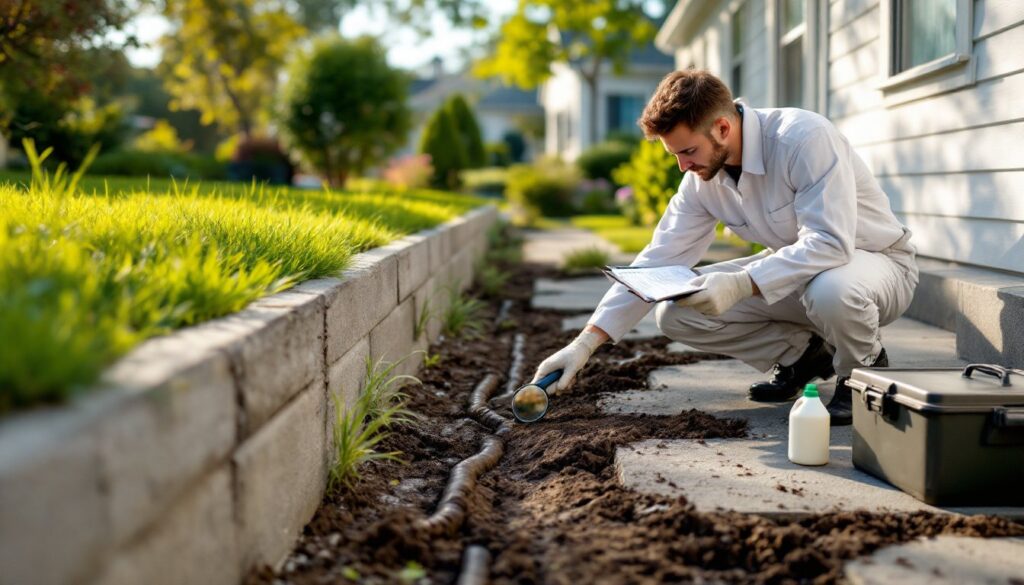
Liquid barrier treatments, also called liquid termiticides, create a chemical perimeter around your home’s foundation. Technicians drill small holes in concrete, inject or spray liquid termiticide along the foundation walls and under the slab, and treat soil around the perimeter.
For an average single-family home, liquid barrier treatments typically run $400 to $900 for the initial application. This usually includes treatment of the foundation perimeter, soil injection, and sometimes interior treatment around plumbing penetrations. The process takes a few hours and doesn’t require you to leave your home during application (though ventilation is recommended).
According to industry pricing data, termite control services typically range from $263 to $1,032, with liquid treatments sitting in the lower-to-mid range for straightforward infestations. The cost depends on your home’s linear footage of foundation and whether the technician must drill through tile, carpet, or concrete.
The main tradeoff: liquid barriers work well but break down over time. Most homeowners need retreatment every 5 to 7 years, or more frequently if conditions change (new construction, landscaping that keeps soil moist, or discovered new activity).
Bait System Installations
Bait systems use in-ground or above-ground bait stations containing slow-acting termiticide. Termites eat the bait and carry it back to the colony, eventually killing the entire colony. This method takes longer to work than liquid barriers but offers continuous monitoring.
Bait system installation costs $800 to $1,500 initially, depending on the number of stations required and your home’s perimeter. A typical installation includes 12 to 20 stations placed around the foundation at intervals. Follow-up monitoring visits are usually required every 3 to 6 months, costing $100 to $300 per visit.
Bait systems excel at detecting new activity early. If termites reappear months or years later, the monitoring stations alert you immediately, and technicians can reinforce treatment without starting over. This preventive approach often saves money long-term compared to repeated liquid barrier reapplications.
For homeowners planning to stay in a house for 10+ years, the cumulative cost of bait systems plus monitoring frequently undercuts the cost of multiple liquid barrier retreatments. But, the upfront cost is steeper, which can be a barrier for tight budgets.
Geographical Location and Regional Price Variations
Where you live significantly affects what you’ll pay. Termite treatment costs vary widely across regions due to local pest pressure, labor costs, material availability, and climate.
Southern states, Florida, Georgia, Texas, Louisiana, and the Carolinas, experience more severe termite pressure and see higher baseline treatment costs. Subterranean termites are aggressive in warm, humid climates, and infestations tend to be more extensive. Homeowners in these regions typically pay at the higher end of the national range: $600 to $1,200 for initial liquid treatment.
Western states like California and Arizona face different termite species, primarily drywood termites, which require different treatment approaches (fumigation or localized heat treatment). These can cost $1,500 to $3,000+ for whole-house treatment, making the West Coast noticeably pricier.
Northern states with cooler climates see fewer termite problems overall, leading to lower average treatment costs and sometimes difficulty finding experienced local contractors. A homeowner in Minnesota might pay $300 to $600 because infestations are less common, but technicians may be harder to find quickly.
Urban vs. rural also matters. City contractors often charge more due to higher overhead, but they’re available quickly. Rural areas may have lower rates but longer wait times for service calls. When comparing quotes, always get bids from multiple local companies and ask about their experience with your specific termite species.
Regional contractor marketplaces like Angi and ImproveNet let you compare local pricing and read reviews, helping you understand what’s typical in your area and avoid overpaying for basic treatment.