Table of Contents
ToggleThe tiny house movement has shifted from niche lifestyle choice to legitimate housing solution, particularly as affordability pressures squeeze the conventional real estate market. But before you commit to downsizing, you need numbers, the real cost of buying or building a tiny house in 2026. The sticker price varies wildly depending on whether you’re buying new, used, building from scratch, or purchasing land separately. This breakdown walks through exactly what a tiny house costs, where your money goes, and what hidden expenses catch most buyers off guard.
Key Takeaways
- The average cost of a tiny house ranges from $50,000–$80,000 for new prefabricated models and $100,000–$250,000 for custom-built homes, with used options typically between $40,000–$70,000.
- Location significantly impacts pricing, with rural areas offering 20–40% lower costs than urban markets like California and the Northeast.
- Land costs are a hidden wildcard that can range from $10,000 in rural areas to $100,000+ in desirable locations, making long-term lot rental calculations essential before purchase.
- Financing a tiny house requires exploring alternatives to traditional mortgages, including RV loans (8–12%), manufactured home loans (6.5–8.5%), and personal loans, as trailer-based homes are classified as personal property.
- Hidden costs including permits ($500–$5,000), inspections ($500–$2,000), site preparation ($5,000–$15,000), and utility connections ($2,000–$10,000) can add 15–25% to the overall budget.
- Buying used tiny homes, negotiating lot rental rates, and choosing DIY finishing touches can reduce costs by 20–35%, making affordability achievable for budget-conscious buyers.
What Is a Tiny House and Why the Price Varies
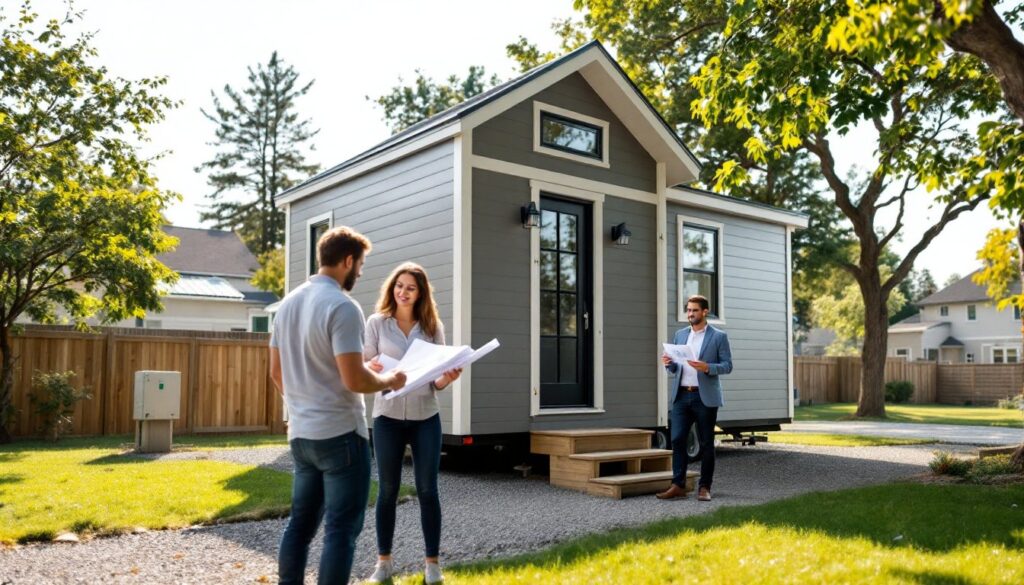
A tiny house typically ranges from 100 to 400 square feet, significantly smaller than the U.S. median home size of around 2,150 square feet. But, the definition matters when comparing costs. Some manufacturers build on permanent foundations (essentially small homes), while others construct on trailers for mobility. Build quality, materials, and finishes vary dramatically.
Price variation stems from several factors working in tandem. A basic, prefabricated tiny house on a trailer might run $35,000–$60,000 in raw construction costs. A custom-built, site-built tiny home with high-end finishes and permanent foundation can exceed $150,000–$200,000. Then add land, permits, utilities, and site prep, costs that have nothing to do with the structure itself. Understanding these moving pieces prevents sticker shock.
Average Tiny House Costs by Type and Size
As of 2026, expect to pay $50,000–$80,000 for a new, off-the-shelf tiny house on a trailer with basic to mid-range finishes. Custom-built or site-built tiny homes run $100,000–$250,000. Used tiny homes typically cost $40,000–$70,000, depending on age, condition, and location.
Size matters proportionally. A 200-square-foot model costs less than a 350-square-foot one, but the per-square-foot price often rises on smaller units due to fixed labor and overhead. A 200-sf tiny house might cost $250/sf, while a 350-sf unit runs $200/sf.
Location affects pricing significantly. Tiny homes in rural areas or states with fewer regulations tend to be cheaper. Urban markets or regions with high material costs (California, Northeast) push prices upward by 20–40%.
New Construction vs. Used Tiny Homes
New construction gives you factory warranties, modern electrical and plumbing systems, and customization options. You’re paying for that guarantee and new-build quality, typically a 15–25% premium over comparable used homes.
Used tiny homes offer lower entry cost but come with unknowns. Inspect plumbing, HVAC, roof condition, and foundation integrity thoroughly. Trailer-based homes should have a recent safety certification. A pre-purchase inspection (budget $500–$1,500) is essential: skipping it to save money almost always costs more later when hidden damage emerges.
Breaking Down the Price Tag: Materials, Labor, and Land
The $50,000–$80,000 price tag for a typical prefabricated tiny house breaks down roughly as follows: materials account for 40–50%, labor for 30–40%, and overhead/profit for 10–20%. In a custom-built home, the split shifts, materials still dominate, but custom labor and design fees bump the labor percentage higher.
Land is the wildcard. Purchasing a lot outright ranges from $10,000 in rural areas to $100,000+ in desirable locations. Many tiny house owners rent land in manufactured home parks or RV parks, paying $300–$800 monthly. Over 10 years, monthly lot rental costs $36,000–$96,000, equivalent to owning land outright in many markets. Calculate the long-term math before assuming renting is cheaper.
Site preparation, clearing, grading, utility connections, adds $5,000–$15,000 on a new lot. Connecting to municipal water and sewer runs $2,000–$10,000 depending on distance. If you’re drilling a well or installing a septic system, budget $5,000–$12,000 per system.
Hidden Costs and Permits You Need to Budget For
Permits and inspections often surprise new tiny house owners. Building permits range from $500 in permissive jurisdictions to $2,000–$5,000 in strict areas. Zoning compliance is the real hurdle, many municipalities prohibit tiny houses or restrict where they’re allowed. Check local zoning ordinances before you fall in love with a plan.
Electrical, plumbing, and mechanical inspections add another $500–$2,000. If the tiny house sits on a trailer, you may need a special permit or certification from the Recreational Vehicle Industry Association (RVIA) in some states.
Ancillary costs mount quickly: survey ($300–$800), title work ($200–$500), homeowner’s insurance ($600–$1,200 annually), and property taxes (varies wildly by location). Tiny homes often qualify for mobile home insurance rather than standard homeowner’s policies, which can be cheaper or more expensive depending on the insurer and risk profile.
If moving an existing tiny house, transportation costs $2,000–$5,000+ depending on distance. Site-built homes can’t be moved, eliminating this concern but locking you into the location.
Financing a Tiny House: Loans and Affordable Options
Traditional mortgages are difficult for tiny houses, especially those on trailers. Lenders classify trailer-based homes as personal property, not real estate, making them ineligible for standard 30-year mortgages. Some credit unions and specialized lenders offer RV loans (rates often 8–12%) with 10–15 year terms.
Personal loans work for smaller budgets: borrow $40,000–$60,000 at conventional personal loan rates (6–10%). But, personal loans typically max out at $100,000 and carry shorter repayment windows (5–7 years), resulting in higher monthly payments than mortgages.
Manufactured home loans exist for site-built tiny homes and can bridge the gap between personal and mortgage rates. These often require 10–20% down and span 15–20 years. Interest rates sit between standard mortgages and personal loans, typically 6.5–8.5%.
Building construction loans finance the build process, releasing funds in stages. Once complete, you refinance into a long-term loan. This works well for custom-built tiny homes but requires sweat equity or contractor labor, adding complexity.
Cash purchase eliminates financing costs but requires significant liquid savings. Those without $40,000–$80,000 in the bank should explore down-payment assistance programs or consider a multi-phase approach: buy land and a used tiny house, then upgrade later.
Money-Saving Tips for Tiny House Buyers and Builders
Buy used if you’re willing to inspect thoroughly. A 3–5 year old tiny house with solid fundamentals costs 20–35% less than new while delivering the same function. Budget for a pre-purchase inspection and reserve funds for repairs.
Choose trailer-based over site-built if mobility or lower entry cost matters. Site-built tiny homes cost more upfront but don’t require land rental and appreciate like traditional real estate. This is a long-term consideration, not a quick savings hack.
Negotiate lot rental rates. Mobile home parks and RV communities often discount rates for longer leases or off-season occupancy. Securing a 5–10% reduction saves hundreds annually.
DIY finishing touches after purchase. Flooring, paint, cabinetry upgrades, and landscaping are areas where hands-on work cuts costs dramatically. Renovation cost guides help you budget specific improvements and understand contractor labor rates if you hire out selective tasks.
Pool resources with co-buyers. Some tiny house communities support co-ownership or shared-land models, splitting land costs and utilities among multiple units. This works best with aligned budgets and compatible neighbors.
Compare financing options aggressively. The difference between a 7% and 9% loan rate on $60,000 over 15 years is roughly $130/month, $23,400 over the loan term. Shop credit unions, banks, and specialized lenders. Pre-approval letters cost nothing and reveal your true borrowing power.
Check affordable tiny home designs from established builders: some offer floor plans optimized for cost without sacrificing livability. Standardized designs cost less than fully custom builds. Use project planning tools to itemize materials and labor, then obtain multiple contractor bids if building custom.